Friday, January 10, 2025

RE -ESTABLISHMENT OF THE CALIPHATE - 2 The Khilafah Is An Obligation


2 The Khilafah Is An Obligation

“The Prophets ruled over the children of Israel, whenever a Prophet died another Prophet succeeded him, but there will be no Prophet after me. There will be Khulafaa’ and they will number many. They asked: What then do you order us? He said: Fulfill the Bay’ah to them one after the other and give them their due. Surely Allah will ask them about what He entrusted them with.”

The Re-establishment of the Khilafah is an obligation upon all Muslims

The Khilafah is a common leadership for all the Muslims in the world. Its role is to establish the laws of the Islamic Shari’ah and to carry the Da’awah of Islam to the world. The Khilafah is also known as the Imamah, both terms have the same meaning. Several Sahih Ahadith mention them with the same meaning, neither of the two terms has ever differed in meaning in any Shari’ah text i.e. the Qur’an or the Sunnah of the Prophet (saw), these being the only Shari’ah texts. It is not compulsory to hold to the term of Khilafah or Imamah, but rather it is compulsory to hold to the meaning of the term.

The establishment of a Khaleefah is an obligation upon all Muslims in the world. Performing this duty, like any of the duties prescribed by Allah (swt) upon the Muslims, is an urgent obligation in which there can be no choice or complacency. Negligence in performing this duty is one of the greatest sins, for which Allah (swt) punishes severely.

The evidence that the appointment of a Khaleefah is obligatory upon all Muslims is found in the Sunnah and the Ijma’a (consensus) of the Sahabah. As for the Sunnah, Nafi’a reported saying: “ ‘Umar said to me that he heard the Prophet (saw) saying: ‘Whosoever takes off his hand from allegiance to Allah (swt) will meet Him (swt) on the Day of Resurrection without having any proof for him, and whoso dies whilst there was no Bay’ah (allegiance) on his neck (to a Khaleefah), he dies a death of Jahiliyyah (ignorance).” So the Prophet (saw) made it compulsory upon every Muslim to have a Bay’ah on his neck, and described whoever dies without a Bay’ah on his neck that he dies a death of Jahiliyyah. The Bay’ah cannot be for anyone except the Khaleefah, and the Prophet (saw) made it obligatory upon every Muslim to have on his neck a Bay’ah to a Khaleefah. Yet he did not make it an obligation upon every Muslim to give Bay’ah to a Khaleefah. The duty is the existence of a Bay’ah on the neck of every eligible Muslim, i.e. the existence of a Khaleefah who accordingly deserves a Bay’ah upon the neck of every Muslim. So it is the presence of the Khaleefah which places a Bay’ah on the neck of every Muslim, whether the Muslim gave a Bay’ah to him in person or not.

Therefore, this Hadith of the Prophet (saw) is an evidence that the appointment of the Khaleefah is an obligation and not a proof that giving the Bay’ah is obligatory. This is because the Prophet (saw) rebuked the Muslim who has no Bay’ah on his neck until he dies, not the one who did not give Bay’ah.. Hisham ibn ‘Urwa reported on the authority of Abu Saleh on the authority of Abu Hurayrah that the Prophet (saw) said: “Leaders will take charge of you after me, where the pious (one) will lead you with his piety and the impious (one) with his impiety, so listen to them and obey them in everything which conforms with the truth. If they act rightly it is for your credit, and if they acted wrongly it is counted for you and against them.” Muslim narrated on the authority of al-A’araj, on the authority of Abu Hurayrah, that the Prophet (saw) said: “Behold, the Imam is but a shield from behind whom the people fight and by whom they protect themselves.” Muslim reported on the authority of Abu Hazim, who said: “I accompanied Abu Hurayrah for five years and heard him talking of the saying of the Prophet (saw): The Prophets ruled over the children of Israel, whenever a Prophet died another Prophet succeeded him, but there will be no Prophet after me. There will be Khulafaa’ and they will number many. They asked: What then do you order us? He said: Fulfil the Bay’ah to them one after the other and give them their due. Surely Allah will ask them about what He entrusted them with.” Ibn ‘Abbas narrated that the Prophet (saw) said: “If anyone sees in his Amir something that displeases him let him remain patient, for behold, he who separates himself from the sultan (authority of Islam) by even so much as a hand span and dies thereupon, has died a death of the days of Jahiliyyah”.

In these Ahadith, the Prophet (saw) informs us that leaders will run the affairs of Muslims, and the Ahadith include the description of the Khaleefah as a shield, i.e. a protection. So the description of the Imam as a shield is informative of the benefits of the presence of the Imam, thus it is a command for action, because if the information conveyed by Allah (swt) and the Prophet (saw) contained rebuke then it is a command of abstention, and if it contained praise then it is a command for action. If the ordered action is necessary to implement a Hukm Shari’i (divine law), or by its negligence a Hukm Shari’i will be neglected, then this command is decisive. In these Ahadith there is information also that those who run the affairs of Muslims are Khulafaa’, which indicates an order to appoint them. They also include a prohibition for Muslims to separate from the authority, which indicates the obligation upon Muslims to appoint an authority for themselves, i.e. ruling. Moreover, the Prophet (saw) ordered the Muslims to obey the Khaleefah and to fight those who dispute his authority as the Khaleefah, which indicates an order to appoint a Khaleefah and to protect his Khilafah by fighting against whosoever disputes with him. Muslim reported that the Prophet (saw) said: “He who pledged allegiance to an Imam giving him the clasp of his hand and the fruit of his heart shall obey him as long as he can, and if another comes to dispute with him you have to strike the neck of that man.” So the command to obey the Imam is an order to establish him, and the command to fight those who dispute with him is an evidence that this command is decisive in maintaining the presence of one Khaleefah.

In regards to the Ijma’a of the Sahabah they all agreed upon the necessity to establish a successor or Khaleefah to the Prophet (saw) after his death. They all agreed as well to appoint a successor to Abu Bakr (r.a.), then to ‘Umar (r.a.), then to ‘Uthman (r.a.), after the death of each one of them. The Ijma’a of the Sahabah to establish a Khaleefah manifested itself emphatically when they delayed the burial of the Prophet (saw) after his death whilst engaged in appointing a successor to him. This was despite the fact that the burial of the dead person is a Fard, and that it is Haram upon those who are supposed to prepare for his burial to engage themselves in anything else until they complete the burial. The Sahabah were obliged to engage themselves in preparing the burial of the Prophet (saw). Instead, some of them engaged themselves in appointing a Khaleefah rather than carrying out the burial, and some others kept silent on this engagement and participated in delaying the burial for two nights despite their ability to deny the delay and their ability to bury the Prophet (saw). So this was an Ijma’a to engage themselves in appointing a Khaleefah rather than to bury the dead. This could not be legitimate unless the appointment of a Khaleefah is more obligatory than the burial of the dead. Also, all the Sahabah agreed throughout their lives upon the obligation of appointing a Khaleefah. Although they disagreed upon the person to elect as a Khaleefah, they never disagreed upon the appointment of a Khaleefah, neither when the Prophet (saw) died, nor when any of the Khulafaa’ al-Rashidun died. Therefore the Ijma’a of the Sahabah is a clear and strong evidence that the appointment of a Khaleefah is obligatory.

Furthermore, the establishment of Islam and the implementation of the Shari’ah rules in all walks of life is compulsory on Muslims through definitely proven evidences. This duty cannot be achieved unless there is a ruler who has an authority. The Qaa’idah (divine principle) states ‘that which is necessary to accomplish a Wajib (duty) is itself a Wajib’. So the establishment of a Khaleefah is also compulsory according to this Qaa’idah. This principle can be realised by the following examples,

The Prophet (saw) has stated in one Hadith as narrated by Imam Bayhaqi (ra) in his Sunan that, “Nobody has the right vested in him to establish anything from the Hudood without the Sultan (authority of the State)”.

Imam Tahawi also narrates a Hadith from Muslim ibn Yasar that the Prophet (saw) said, “The (collection of the) Zakah, the (implementation of the) Hudood the (distribution of the) spoils and the (appointment of the) Jumu’ah are for the Sultan”. (A similar narration has been narrated by Ibn Abi Shaybah in his Musanaf and also by Imam Narghiyani. They have been deemed acceptable.)

Hence the obligation of establishing the Khilafah is the obligation upon which many other obligations rest, such as the Hudood (penal codes), collection and distribution of the Zakah, the organising of the main Jumu’ah and it’s Khateeb and other obligations besides these. The removal of Kufr depends upon the resumption of the Khilafah. Establishing Islam in actuality means the establishment of the Khilafah as that is the only method of implementing Islam. Indeed, without the Khilafah the Deen cannot exist in our societies. Hence the whole of Islam depends upon the Khilafah as that is the method that Islam defined to bring it into existence.

The current situation of the Islamic Ummah is a testament to this fact. The Islamic penal code is absent and is replaced with that of the European countries. The economic system of Islam has been replaced by that of the Capitalists and today the resources of the Muslim Ummah are the spoils that are distributed by the Kuffar. The Islamic lands are occupied despite the military capacities of the Muslim armies. The absence of the Islamic way of life in our countries is ever affecting the societal fabric with nightclubs and bars arising in the holy lands of al-Quds, as well as many other major cities and capitals in the Islamic world. These stark facts unfortunately clearly illustrate the absence of Islam and the truthfulness of the statements of the Messenger of Allah (saw).

Moreover, Allah (swt) has ordered the Prophet (saw) to rule between Muslims by that which He (swt) revealed to him, and the order of Allah (swt) to him was in a decisive manner. Allah (swt) addressed the Prophet (saw) saying:

“And rule between them by that which Allah revealed to you, and do not follow their vain desires away from the truth which came to you”. (TMQ al-Ma’idah, verse 48)

And He (swt) said:

“And rule between them by that which Allah revealed to you and do not follow their whims, and beware (be on the alert) that they may deviate you away from even some part of what Allah revealed to you”. (TMQ al-Ma’idah, verse49)

The speech of Allah (swt) to the Prophet (saw) is a speech to his Ummah unless there is an evidence which limits the speech to him. In this case there is no such evidence, so the aforementioned verses order all Muslims to establish the rule of Allah (swt). The establishment of the Khaleefah does not mean other than the establishment of the rule and the authority of Allah (swt). On the other hand, Allah (swt) made it obligatory upon Muslims to obey those in authority, meaning the ruler, which indicates that the existence of the ruler is obligatory upon Muslims. Allah (swt) said:

“O you who believe obey Allah and obey the Messenger and those in authority from amongst you”. (TMQ al-Nisa’a, verse 59)

Allah (swt) does not order obedience to those who do not exist. This indicates that the existence of the ruler is obligatory. When Allah (swt) orders obedience to those in authority it is an order to establish them. The implementation of the Shari’ah depends upon the existence of the ruler, thus, the establishment of the ruler becomes obligatory as its absence will result in the sin of neglecting the Shari’ah.

Therefore, it is clear from these evidences that the establishment of the ruling and the authority amongst Muslims is Fard, and it is also clear that the appointment of a Khaleefah who takes charge of the rule and the authority, is compulsory upon Muslims in order to implement the Shari’ah laws; and not for the sake of ruling and authority only. Reflect upon what the Prophet (saw) said: “The best of your Imams (leaders) are those whom you love and they love you, who pray for you and you pray for them; and the worst of your Imams are those whom you hate and they hate you and you curse them and they curse you.’ The Messenger of Allah (saw) was asked: ‘Would we not declare war on them (face them with the swords)?’ He said: ‘No, as long as they establish Salah (meaning Islam) among you.” This Hadith is clear in informing about the good and bad leaders, and clear in prohibiting the challenge of their authority as long as they establish the prayer, which in this context indicates upholding of Islam, and establishing its rule.

So the obligation upon Muslims to appoint a Khaleefah who establishes the laws of Islam and conveys its call is a matter which has no doubt with regard to its certainty in the sound texts of Shari’ah. Moreover, it is an obligatory duty due to the fact that Allah (swt) made it a Fard upon Muslims to establish the authority of Islam and to protect the honour of Muslims. However, this duty is a collective one, so if some people of the Ummah accomplished it, the Fard is fulfilled and thus responsibility drops from the rest of the Ummah. And if part of the Ummah was unable to accomplish the Fard, though they carried out the actions of establishing it, then the responsibility remains upon all the Muslims, and the Fard remains upon every Muslim as long as Muslims are without a Khaleefah.

To refrain from establishing a Khaleefah for the Muslims is a great sin because it is abstaining from carrying out a very important Fard of Islam, upon which the implementation of the divine laws depends, even upon which the presence of Islam in the battlefield of life depends as well. So Muslims as a whole commit a great sin by refraining from establishing a Khaleefah for all Muslims. And if they agreed to remain without a Khaleefah the sin would befall all Muslims in the entire world. If some of the Muslims embarked on working to establish a Khaleefah and the others did not, the sin will drop from the shoulders of those who started to work to establish the Khaleefah, while the Fard remains on them until the Khaleefah is appointed. This is because the involvement in establishing the Fard removes the sin for the delay of its fulfillment in its time, and for its non-fulfillment, despite one’s engagement in the work for establishing it, and despite his hatred of that which prevents him from accomplishing it.

As for those who were not engaged in the work for establishing the Fard, the sin would remain on them as soon as the three days period has passed, from the departure of the Khaleefah until the appointment of a new Khaleefah. This is because Allah (swt) had entrusted them with a Fard, which they did not carry out nor did they engage themselves in the work which was required for its completion. Therefore, they would be sinful and would deserve the punishment and shame from Allah (swt) in this life and the hereafter. They would be sinful due to their slackness in establishing the Khaleefah or from the actions which (according to Shari’ah) establish the Khaleefah. It is clear and obvious that a Muslim deserves the punishment of Allah (swt) when he ignores any of the duties enjoined upon him, particularly the duty by which the other duties are implemented, the Shari’ah rules are established, the matter of Islam is brought aloft and the word of Allah (swt) is exalted in the Islamic world and elsewhere.

Accordingly, no Muslim on the face of this earth has an excuse to abandon the duty of establishing the Deen which Allah (swt) has ordered, that is, the establishment of a Khaleefah for Muslims, when there is no Khilafah on the earth, and no one to implement the limits (Hudood) of Allah (swt) to protect the sanctities of Allah (swt), and no one to implement the laws of the Deen and unify the Muslim community under the banner of Laa ilaha illa Allah, Muhammad al-Rasul Allah. There is no permission in Islam to abandon the work for this duty until it is indeed accomplished.

Reference: Th Method to Re-establish the Khilafah - HT Britain

Wednesday, January 8, 2025

Bani Shaibah - Penjaga Kunci - Kaabah

Pemengang Amanah Kunci Kaabah dari keturunan Syaibah ibn Uthman ,


Bani Shaiba (Bahasa Arab: بني شيبه, lit. 'anak-anak Shaiba') adalah sebuah puak Arab yang tergolong dalam sub-klan Banu Abd al-Dar, yang merupakan sebahagian daripada konfederasi suku Quraisy yang lebih besar di wilayah Hejaz moden. Arab Saudi. Mereka kebanyakannya terdiri daripada keturunan Uthman ibn Talha, bapanya Talha ibn Abdullah dan datuknya Abd al-Dar ibn Qusai. Mereka diketahui secara sejarah telah menjalankan peranan Penjaga Kaabah dan oleh itu telah memegang kunci Kaabah sejak zaman pra-Islam dan seterusnya selepas Penaklukan Mekah oleh nabi Islam Muhammad pada 630 CE.[ 1]

Ahli-ahli puak menyambut pengunjung ke dalam Kaabah semasa upacara pembersihan dan membersihkan kawasan pedalaman bersama-sama pengunjung. Sheikh Abdul-Aziz Al-Sheibi (kadangkala dieja Al-Shaibi[2]), yang meninggal dunia pada November 2010, menyimpan kunci selama lapan belas tahun.[3] Abangnya, Abdul Qader Al-Sheibi, menjadi pemegang kunci baharu.[3] Abdul Qader Al-Sheibi meninggal dunia pada 23 Oktober 2014.[4] Syeikh Abdul Qadir Al-Shaibi ialah pengganti ke-108 Uthman ibn Talha.[5]


[Anak kunci Pintu Kaabah]

[Kunci alat2 Pintu Kaabah]

[Anak Kunci Lengkap Pintu Kaabah]

[Anak Kunci Pintu Kaabah]

[Sarong Kunci Kaabah]

Bani Shaiba (Bahasa Arab: بني شيبه, lit. 'anak-anak Shaiba') adalah sebuah puak Arab yang tergolong dalam sub-klan Banu Abd al-Dar, yang merupakan sebahagian daripada konfederasi suku Quraisy yang lebih besar di wilayah Hejaz moden. Arab Saudi. Mereka kebanyakannya terdiri daripada keturunan Uthman ibn Talha, bapanya Talha ibn Abdullah dan datuknya Abd al-Dar ibn Qusai. Mereka diketahui secara sejarah telah menjalankan peranan Penjaga Kaabah dan oleh itu telah memegang kunci Kaabah sejak zaman pra-Islam dan seterusnya selepas Penaklukan Mekah oleh nabi Islam Muhammad pada 630 CE.[ 1]

Ahli-ahli puak menyambut pengunjung ke dalam Kaabah semasa upacara pembersihan dan membersihkan kawasan pedalaman bersama-sama pengunjung. Sheikh Abdul-Aziz Al-Sheibi (kadangkala dieja Al-Shaibi[2]), yang meninggal dunia pada November 2010, menyimpan kunci selama lapan belas tahun.[3] Abangnya, Abdul Qader Al-Sheibi, menjadi pemegang kunci baharu.[3] Abdul Qader Al-Sheibi meninggal dunia pada 23 Oktober 2014.[4] Syeikh Abdul Qadir Al-Shaibi ialah pengganti ke-108 Uthman ibn Talha.[5]

Selepas kematian Syeikh Abdul Qadir, Dr. Saleh bin Zain Al-Abidin Al-Shaibi, ahli keluarga Shaibi yang tertua menjadi penjaga baru kunci Kaabah sehingga kematiannya pada 22 Jun 2024.[6] Penjaga baharu ialah Abdul Wahab bin Zian Al-Abidin Al-Shaibi.

Sejarah

Kunci Kaabah dikurniakan kepada Tasm, sebuah puak ʿĀd sebelum Quraisy. Ia diserahkan kepada Khuza'a, kemudian Qusai, yang memberikannya kepada anaknya Abdul Dar, yang menyerahkannya kepada anaknya Othman. Ia berpindah dari satu orang ke orang lain sehingga ia berehat dengan anak saudara mereka Shaiba. Ia masih diwarisi oleh pengganti mereka. [rujukan?] Muhammad, menyerahkan kunci kepada Bani Shaiba pada tahun penaklukan Mekah, dan berkata, "Ambillah, wahai Bani Thalha, selama-lamanya hingga hari kiamat, dan ia tidak akan diambil daripada kamu melainkan oleh seorang yang zalim lagi zalim".[7] Sebuah gerbang berdiri bebas berdiri di mana rumah Bani Shaybah terletak berhampiran Kabah sehingga ia dipindahkan sekitar tahun 1950 CE untuk meluaskan kawasan Mataf.


References

[edit]
  1. ^ Estes, Yusuf (11 November 2011). "Kabah's Key Keeper Dies at 82". Islam News Room. Retrieved 18 September 2014.
  2. ^ "Al-Shaibi given new Kaaba key"Arab News. 19 November 2013. Retrieved 18 September 2014.
  3. Jump up to:a b Al-Alawi, Irfan (11 November 2010). "Mourning a Great Servant of the Ka'aba"Center for Islamic Pluralism. Retrieved 18 September 2014.
  4. ^ "Kaaba key keeper dies". 24 October 2014.
  5. ^ "Kaaba's senior keeper Al-Shaibi passes away". Business Recorder. Retrieved 2016-02-09.
  6. ^ "Saleh Al-Shaibi, senior caretaker of the Kaaba, dies". Arab News. 2024-06-22. Retrieved 2024-06-23.
  7. ^ Akhter, Muhammad Wajid (15 November 2012). "Ten Things You Didn't Know About The Kaaba". MuslimMatters. Retrieved 18 September 2014.
  8. ^ "Bab Bani Shaiba". Madain Project. Archived from the original on 26 May 2020. Retrieved 26 May 2020.
  9. ^ "Mataf". Madain Project. Archived from the original on 26 May 2020. Retrieved 26 May 2020.

Monday, January 6, 2025

The News of Ghayb (Unseen, Unknown) From The Qur’an - The Drowning of the Pharaoh


وَإِذْ فَرَقْنَا بِكُمُ ٱلْبَحْرَ فَأَنجَيْنَـٰكُمْ وَأَغْرَقْنَآ ءَالَ فِرْعَوْنَ وَأَنتُمْ تَنظُرُونَ ٥٠

 “And remember We divided the sea for you and saved you and drowned Pharaoh's people within your very sight.” 

(Al-Baqara 50)


And when the two bodies saw each other, the people of Moses said: "We are sure to be overtaken." (Moses said: 

فَلَمَّا تَرَٰٓءَا ٱلْجَمْعَانِ قَالَ أَصْحَـٰبُ مُوسَىٰٓ إِنَّا لَمُدْرَكُونَ ٦١

قَالَ كَلَّآ ۖ إِنَّ مَعِىَ رَبِّى سَيَهْدِينِ ٦٢

فَأَوْحَيْنَآ إِلَىٰ مُوسَىٰٓ أَنِ ٱضْرِب بِّعَصَاكَ ٱلْبَحْرَ ۖ فَٱنفَلَقَ فَكَانَ كُلُّ فِرْقٍۢ كَٱلطَّوْدِ ٱلْعَظِيمِ ٦٣

وَأَزْلَفْنَا ثَمَّ ٱلْـَٔاخَرِينَ ٦٤

وَأَنجَيْنَا مُوسَىٰ وَمَن مَّعَهُۥٓ أَجْمَعِينَ ٦٥

ثُمَّ أَغْرَقْنَا ٱلْـَٔاخَرِينَ ٦٦

"By no means! my Lord is with me! Soon will He guide me! Then We told Moses by inspiration: "Strike the sea with thy rod." So it divided, and each separate part became like the huge, firm mass of a mountain. And We made the other party approach thither. We delivered Moses and all who were with him, But We drowned the others."

(Ash-Shuara 61-66)


The glorious Qur’an informs about the end of the Pharaoh with the verses given above and states that the Pharaoh and his army were drowned in the sea.  Now let us pay attention to the following verse of the Qur’an.  The 48th verse of the surah al-Ankaboot states the following: “And thou wast not (able) to recite a Book before this (Book came) nor art thou (able) to transcribe it with thy right hand: in that case, indeed, would the talkers of vanities have doubted.”

According to the explicit declaration of this verse, the Prophet Muhammad (Peace be Upon Him) did not know how to read and write. Neither did he write a letter nor did he read a letter. While this is the fact, then, how did he inform about the Pharaoh who had lived ages ago before him and his drowning in the sea?

Let us put the answer of how did he informs off and search for the answer to the following question: Did Pharaoh really die by being drowned in the water? Has this news of the Qur’an about the end of Pharaoh been approved?

Now, we want to read the related Egyptian papyrus number 6, which dates to the time of the Pharaoh in the British Museum England:

 “From Amenamoni, head of the protective books of the white room of the palace, to the scribe Penterhor:

When this letter reaches you and has been read point by point, surrender your heart to the sharpest pain, like a leaf before the storm, when you learn of the sorrowful disaster of drowning in the whirlpool. Calamity struck him suddenly and inescapably. The sleep in the waters has made something helpless out of something great. Depict the destruction of the lords, the lord of the tribes, the king of the east and the west. What news can compare to the news I have sent you?”

Here in this scripture, there is a clear explanation about the Pharaoh that he was drowned in the sea. That is, the 6th Egyptian papyrus approves the news of the Qur’an’.  The news of the Qur’an has been approved by historical scriptures.

Now let us look at our first question: How could a person who did not write or read a letter know and learn the disastrous end of a person who had lived ages before him? If we do not accept the Qur’an as a word of God, then how can we answer this question? Otherwise, do we consider this a coincidence? No, this cannot be a coincidence. This question must have an answer…

This question has only one answer and it is as follows: “This book was sent by Glorious God, who knows all times from past to future. God Almighty informed us about the events of the past and future with the Qur’an and made this news a miracle of the Qur’an…”

Yes, how could the people who deny the Qur’an to be a word of God explain the miraculous news of the Qur’an that informs us about the drowning of the Pharaoh in the sea and its other news about the unseen? Not accepting this book as a word of God means ignoring the truth and denying the reality. The Qur’an is a book and word of God with the correctness of its news about the unseen.

Wednesday, January 1, 2025

Kebenaran Yang Melibatkan Kisah Hukuman Bunuh Bani Qurayza


Agama Yahudi telah pun bertapak di Madinah dua abad sebelum kelahiran Muhammad. Walaupun berpengaruh, orang Yahudi tidak memerintah oasis itu. Sebaliknya, mereka adalah pelanggan dua puak besar Arab di sana, Khazraj dan Aws Allah, yang melindungi mereka sebagai balasan untuk kesetiaan feudal. Yahudi Madinah adalah ahli perhiasan, dan pembuat senjata dan perisai. Terdapat banyak puak Yahudi-beberapa catatan menunjukkan lebih daripada dua puluh, di mana tiga daripadanya adalah terkemuka-Banu Nadir, Bani Qaynuqa, dan Bani Qurayza.

Pelbagai tradisi menegakkan pandangan yang berbeza, dan tidak jelas sama ada puak Yahudi Madinah adalah Yahudi Arab atau Arab yang mengamalkan tauhid Yahudi. Sudah pasti mereka adalah penutur bahasa Arab dengan nama Arab. Mereka mengikuti ajaran asas Taurat, walaupun para sarjana mempersoalkan kebiasaan mereka dengan Talmud dan keilmuan Yahudi, dan terdapat cadangan dalam Al-Quran bahawa mereka mungkin telah memeluk kepercayaan yang tidak ortodoks, seperti menganggap Nabi Ezra sebagai anak Tuhan.

Terdapat rabbi di kalangan orang Yahudi Madinah, yang muncul dalam sumber Muslim sejurus selepas Muhammad mengisytiharkan dirinya sebagai nabi. Pada masa itu orang Mekah yang bertanya-tanya, yang mengetahui sedikit tentang tauhid, dikatakan telah berunding dengan para rabbi Madinah, dalam usaha untuk menguji Muhammad. Para rabbi mengemukakan tiga soalan teologi kepada orang Mekah untuk bertanya kepada Muhammad, menegaskan bahawa mereka akan tahu, melalui jawapannya, sama ada dia bercakap benar atau tidak. Menurut laporan kemudian, Muhammad menjawab kepuasan para rabbi, tetapi orang Mekah tetap tidak yakin.

Muhammad tiba di Madinah pada tahun 622 kerana percaya puak Yahudi akan menyambutnya. Bertentangan dengan jangkaan, hubungannya dengan beberapa puak Yahudi di Madinah tidak selesa hampir sejak awal. Ini mungkin sebahagian besarnya adalah soal politik tempatan. Madinah bukanlah sebuah bandar seperti sebuah penempatan pertanian yang berpecah-belah yang dikelilingi oleh kubu-kubu dan kubu-kubu kuat, dan semua hubungan di oasis itu tidak tenteram. Malah, Muhammad telah dijemput ke sana untuk menimbang tara perang saudara berdarah antara Khazraj dan Aws Allah, di mana puak-puak Yahudi, sebagai pelanggan mereka, terlibat.

Atas desakan Muhammad, puak kafir Madinah, Islam dan Yahudi menandatangani perjanjian untuk melindungi satu sama lain, tetapi untuk mencapai tatanan sosial baru ini adalah sukar. Beberapa orang pagan tertentu dan orang Madinah yang baru memeluk Islam cuba menggagalkan pengaturan baru itu dengan pelbagai cara, dan beberapa puak Yahudi berasa tidak senang dengan ancaman kematian pakatan lama. Sekurang-kurangnya tiga kali dalam lima tahun, pemimpin Yahudi, yang tidak selesa dengan perubahan situasi politik di Madinah, menentang Muhammad, dengan harapan dapat memulihkan keseimbangan kuasa yang tegang, kadang-kadang berdarah-tetapi boleh diramalkan di kalangan puak.

Menurut kebanyakan sumber, individu dari kalangan puak ini merancang untuk mengambil nyawanya sekurang-kurangnya dua kali, dan sekali mereka datang untuk meracuninya. Dua puak - Bani Nadir dan Bani Qaynuqa - akhirnya diasingkan kerana gagal memenuhi komitmen yang telah dipersetujui dan akibat bahaya yang mereka timbulkan kepada masyarakat Islam yang baru lahir.

Bahaya itu hebat. Dalam tempoh ini, orang Mekah secara aktif cuba mengusir Muhammad secara ketenteraan, dua kali berbaris tentera besar ke Madinah. Muhammad hampir terbunuh dalam pertunangan pertama, di dataran Uhud di luar Madinah. Dalam dorongan ketenteraan kedua dan terakhir mereka terhadap Madinah, yang kini dikenali sebagai Pertempuran Parit, orang Mekah merekrut sekutu dari barat laut Arab untuk menyertai pertempuran, termasuk bantuan dua suku Yahudi yang dibuang. Di samping itu, mereka menghantar utusan kepada suku Yahudi terbesar yang masih di Madinah, Bani Qurayza, dengan harapan mendapat sokongan mereka. Lokasi penting Bani Qurayza di sebelah selatan Madinah akan membolehkan orang Mekah menyerang Muhammad dari dua pihak.

Bani Qurayza teragak-agak untuk menyertai pakatan Mekah, tetapi apabila tentera Mekah yang besar tiba, mereka bersetuju.

Ketika pengepungan bermula, Bani Qurayza dengan cemas menanti perkembangan selanjutnya. Mengetahui niat mereka untuk berpaling tadah dan menyedari bahaya besar yang ditimbulkan ini, Muhammad memulakan usaha diplomatik untuk mengekalkan Bani Qurayza di pihaknya. Sedikit kemajuan telah dicapai. Pada minggu ketiga pengepungan, Bani Qurayza mengisyaratkan kesediaan mereka untuk bertindak terhadap Muhammad, walaupun mereka menuntut agar orang Mekah memberikan mereka tebusan terlebih dahulu, untuk memastikan bahawa mereka tidak akan ditinggalkan untuk menghadapi Muhammad seorang diri. Namun itulah yang berlaku. Orang-orang Mekah, yang hampir keletihan, enggan memberikan tebusan kepada Bani Qurayza. Tidak lama kemudian, hujan yang sejuk dan lebat turun, dan orang-orang Mekah berhenti berperang dan berbaris pulang, dengan ketakutan dan kekecewaan Bani Qurayza.

Orang Islam kini memulakan pengepungan selama 25 hari terhadap kubu Bani Qurazya. Akhirnya, kedua-dua pihak bersetuju untuk timbang tara. Seorang bekas sekutu Banu Qurayza, seorang ketua Arab bernama Sa'd ibn Muadh, kini seorang Muslim, dipilih sebagai hakim. Sa'd, salah seorang daripada beberapa korban pertempuran, akan segera mati akibat luka-lukanya. Sekiranya hubungan suku yang lebih awal telah berlaku, dia pasti akan menyelamatkan Bani Qurayza. Rakan-rakan ketuanya mendesaknya untuk mengampuni bekas sekutu ini, tetapi dia menolak. Pada pandangannya, Bani Qurayza telah menyerang tatanan sosial baru dan gagal untuk menghormati perjanjian mereka untuk melindungi bandar itu. Dia memutuskan bahawa semua lelaki harus dibunuh. Muhammad menerima penghakimannya, dan keesokan harinya, menurut sumber Muslim, 700 orang Bani Qurayza telah dihukum mati. Walaupun Sa'd menilai menurut pandangannya sendiri, keputusannya bertepatan dengan Ulangan 20:12-14.

Kebanyakan sarjana episod ini bersetuju bahawa kedua-dua pihak tidak bertindak di luar batasan hubungan biasa di Arab abad ke-7. Perintah baru yang dibawa oleh Muhammad dilihat oleh banyak pihak sebagai ancaman kepada sistem pakatan puak yang lama, seperti yang terbukti. Bagi Bani Qurayza, pengakhiran sistem ini nampaknya membawa banyak risiko. Pada masa yang sama, umat Islam menghadapi ancaman pemusnahan total, dan perlu menghantar mesej kepada semua kumpulan di Madinah yang mungkin cuba mengkhianati masyarakat mereka pada masa hadapan. Adalah diragui bahawa mana-mana pihak boleh berkelakuan berbeza dalam keadaan tersebut.

Namun Muhammad tidak mencampuradukkan perbalahan hubungan klan di oasis dengan mesej agama Yahudi. Petikan-petikan dalam Al-Quran yang memberi amaran kepada umat Islam untuk tidak membuat perjanjian dengan Yahudi Arab muncul dari situasi perang tertentu ini. Semangat penghormatan, penerimaan, dan persahabatan yang lebih besar berlaku, seperti yang tercatat dalam surah akhir Al-Quran:

Kami telah menurunkan Taurat, yang di dalamnya terdapat petunjuk dan cahaya, yang dengan kitab itu nabi-nabi yang berserah diri kepada kehendak Allah memberikan keputusan kepada orang-orang Yahudi. Juga, para rabbi dan ahli Taurat (melakukan hal yang sama), sesuai dengan bahagian Kitab Tuhan yang dipercayakan kepada mereka, dan mereka menjadi saksi untuknya juga…. Barangsiapa tidak memutuskan perkara menurut apa yang diturunkan Allah (termasuk Taurat), maka sesungguhnya mereka adalah orang-orang yang kafir. (5:44)

Beberapa individu Yahudi Madinah, termasuk sekurang-kurangnya seorang rabbi, menjadi Muslim. Tetapi secara amnya, orang-orang Yahudi Madinah tetap setia dengan kepercayaan mereka. Secara teologi, mereka tidak boleh menerima Muhammad sebagai utusan Tuhan, kerana, selaras dengan kepercayaan Yahudi, mereka sedang menunggu seorang nabi untuk muncul dari kalangan kaum mereka sendiri.

Banu Nadir dan Bani Qaynuqa yang diasingkan berpindah ke oasis utara Khaybar yang makmur, dan kemudiannya berjanji setia politik kepada Muhammad. Puak-puak Yahudi lain menghormati perjanjian yang telah mereka tandatangani dan terus hidup dengan aman di Madinah lama selepas ia menjadi ibu kota Islam di Arab.


Tuesday, December 3, 2024

Hikmah Nabi Muhammad - Perkahwinan dan Penceraian


Islam meletakkan undang-undang yang rasional dan adil tentang perkahwinan dan Perceraian yang memuaskan hati serta otak manusia. Undang-undang perkahwinan dan penceraian dalam agama lain semakin hari semakin dekat dengan Islam.

Allah berfirman di dalam Al-Quran bahawa Dia telah menciptakan kita berpasangan dan meletakkan simpati dan kasih sayang antara jantina supaya kita mendapat penghiburan dan kebahagiaan antara satu sama lain. dengan persetujuan bebas •pihak-pihak Pada masa perkahwinan pengantin lelaki perlu membuat penyelesaian mahar ke atas isteri yang dianggap sebagai hutang di pihaknya dan yang boleh dituntut oleh isteri dan diperoleh secara sah dan atas kematian suami. adalah tuduhan pertama ke atas hartanya

Jika sisuami  tidak menemui isterinya sebagai pendamping yang sesuai, dia boleh menceraikannya tetapi perlu membayar mahar yang telah ditetapkan dengan serta-merta. berdamai supaya perceraian tidak perlu berlaku Jika tidak ada perdamaian, perceraian menjadi mutlak dan kedua-dua pihak bebas untuk melangsungkan perkahwinan lain Jika seorang isteri tidak berpuas hati dengan suaminya dia boleh mendapatkan perceraian yang dipanggil Khulla dengan syarat melepaskan haknya untuk mahar. 

Jika pihak-pihak boleh bersetuju tentang hak penjagaan anak-anak mereka boleh berbuat demikian, jika tidak mahkamah akan memutuskan perkara itu demi kepentingan terbaik anak-anak Al-Quran memperuntukkan bahawa apabila timbul pertikaian pasangan suami isteri hendaklah kedua-duanya melantik penimbangtara mereka yang sepatutnya mencari penyelesaian secara baik bagi pertikaian mereka dan memulihkan hubungan harmoni di antara mereka Jika usaha penimbang tara gagal dan bukannya berkekalan. ketidakbahagiaan pihak-pihak boleh mengambil jalan keluar untuk bercerai dan berkahwin di tempat lain mengikut pilihan mereka. 

Semasa meneruskan perkahwinan itu suami terikat untuk menanggung isteri dan anak-anak perkahwinan dan boleh dipaksa oleh undang-undang untuk berbuat demikian Suami tidak boleh mengawal harta isterinya yang kekal di tangannya sendiri d Dia juga mengekalkan namanya sendiri dan tidak perlu memanggil dirinya Puan seseorang Slie boleh terlibat dalam perniagaan menjalankan hak perbandarannya dan sebenarnya adalah warganegara bebas seperti suaminya

Jadilah ides mewarisi harta ibu bapa bersama-sama dengan abang-abangnya shv, iihtrits. alao harta suaminya bersama-sama anak-anaknya Dalam matteis agama Islam memberinya <:hak sama seperti lelaki dan la\s atas kewajipan-kewajipannya terhadap lelaki seperti sembahyang, puasa sedekah haji dsb.

Nabi saw bersabda bahawa perkara yang dibenarkan oleh syariat Islam tetapi tidak diredhai Allah ialah perceraian Oleh itu, pasangan Muslim wajib berusaha untuk menyesuaikan diri sebelum bercerai. Seorang Muslim tidak boleh membenci pasangannya. isteri menyelamatkan Nabi dan jika dia tidak senang dengan satu sifat buruk padanya maka hendaklah dia meredhai yang lain yang baik Begitu juga isteri yang sabar terhadap suaminya memperoleh pahala rohani dengan itu Ilmu yang sikap tidak munasabah mereka akan membawa kepada penceraian membuatkan mereka berkelakuan baik antara satu sama lain

Kedua-dua di Perancis dan di kalangan orang Hindu isteri atau ibu bapanya perlu menyediakan mas kahwin yang menjadi hak milik suami Di kalangan orang Hindu perjuangan sedang berlaku menentang mas kahwin yang terlalu tinggi yang dituntut oleh bakal suami Hak untuk bercerai bagi pasangan suami isteri yang tidak bahagia dan di mana suami adalah sangat kejam dituntut Wanita Hindu juga meminta supaya undang-undang diubah supaya mereka boleh mewarisi harta bersama-sama dengan saudara lelaki mereka Semua ini menunjukkan mereka akan datang secara garisan wuth Idea Islam tentang nilai dan status wanita yang Nabi saw telah berikan kepada wanita Islam kira-kira empat belas ratus tahun yang lalu Hak balu Hindu untuk berkahwin semula juga lebih kurang diterima sekarang dan terdapat sangat sedikit penganut adat kejam Sati.

Walaupun ditentang kuat oleh Gereja di negara-negara Kristian hak untuk bercerai telah dimenangi oleh orang ramai selepas perjuangan panjang dan getir Gereja Roman Katolik, namun masih menyerahkan kepada Neraka mereka yang memperoleh perceraian daripada mahkamah sivil

Saya lampirkan di bawah ini pendapat beberapa pemikir Barat tentang perkara yang menunjukkan betapa mereka bimbang untuk menerima pakai idea Islam tentang perkahwinan dan perceraian —

Mt Bertrand Russd berkata

Gereja Katolik menentang perceraian sepenuhnya atas dasar apa sekalipun Republik Soviet membenarkan perceraian atas permohonan mana-mana pihak Britain mengakui hanya satu alasan iaitu perzinaan

Saya tidak fikir bahawa perzinaan dengan sendirinya sepatutnya menjadi alasan untuk bercerai. Peratusan besar suami dan peratusan isteri yang tidak ketara kadang-kadang dan lebih kurang secara sewenang-wenangnya tidak setia terutamanya semasa perpisahan secara paksa tanpa ada keinginan untuk memecahkan rumah tangga atau sebarang pemberhentian. kasih sayang bersama Alasan yang paling biasa untuk perceraian adalah yang pada masa ini dibenarkan di beberapa negara iaitu persetujuan bersama Undang-undang Britain seperti New York State menetapkan bahawa tidak boleh berlaku perceraian jika kedua-dua pihak menginginkannya. Ini sememangnya tidak masuk akal

'Bukti rasmi perzinaan di mahkamah membawa kepada banyak skandal bohong dan memalukan dan merupakan perniagaan keji Jika persetujuan bersama diterima, persoalan nafkah dan hak penjagaan anak-anak boleh diselesaikan di luar mahkamah melalui perjanjian persendirian antara suami dan isteri. mahkamah sedang mereb dipanggil untuk membenarkan apa sahaja persetujuan yang telah dicapai

Walau bagaimanapun, masih terdapat perkara seperti jenayah gila dan lain-lain. Kegagalan untuk mengiktiraf alasan perceraian ini adalah kezaliman yang tidak boleh ditanggung bukan sahaja kepada suami atau isteri tetapi juga kepada anak-anak.

Walau bagaimanapun, saya berpegang bahawa dalam soal moral peribadi, ibu bapa harus lambat untuk bercerai kecuali atas sebab yang serius. Walau bagaimanapun, cara untuk memastikan ini bukanlah dengan undang-undang yang keras tetapi dengan menjadikan ibu bapa lebih sedar tentang kewajipan mereka terhadap anak-anak dan keperluan Saling bertolak ansur hasil daripada kewajipan ini

Jika ada kanak-kanak, alasan yang biasa untuk bercerai adalah atas persetujuan bersama, alasan lain adalah gila jenayah berat, kebiasaan mabuk dan penyakit tertentu lain.

Fanny Hurst berkata —

Kesepakatan prosedur di kalangan Amerika Syarikat nampaknya adalah penolakan sebulat suara mereka untuk mengiktiraf aspek kontrak perkahwinan atau untuk menyelesaikan dilema perceraian seperti mana-mana pelanggaran perjanjian undang-undang yang lain antara pihak-pihak Gereja terus menjerit Siapa yang telah dipersatukan oleh Tuhan, jangan biarkan manusia bercerai-berai Tetapi ramai lelaki dan wanita terpikat untuk berkahwin dengan isyarat keghairahan palsu yang mengakibatkan ketidakserasian perzinaan tanpa sokongan kekejaman penyingkiran dsb. Kesan daripada memegang seperti itu. membusukkan perkahwinan bersama atau menjebak anak dalam maksiat rumah tangga yang dibina di atas pasir ketidakpercayaan kebencian dan kekecewaan adalah di luar anggaran anggaran yang sama ada Gereja mahupun Negara nampaknya cenderung untuk merenungkannya.

H G Wells berkata

Saya tidak mahu Negara campur tangan untuk membuat orang hidup bersama atau mewajibkan mereka untuk tinggal berasingan 1 tidak akan menghukum sebarang goyah keinginan Jika salah satu atau kedua-dua pihak dalam perkahwinan gagal dalam tanggungjawab mereka (terhadap anak-anak mereka) maka Negara harus melantik pemegang amanah dan penilai yang mempunyai kuasa dan kuasa untuk memanggil semula mereka kepada tanggungjawab mereka dengan kuasa untuk memanggil mereka bersama-sama dan mengatur skim kerja terbaik untuk kanak-kanak atau kanak-kanak berkenaan Sekiranya perkahwinan tanpa anak saya tidak nampak mengapa Negara itu institusi yang terlalu bekerja, harus dipaksa untuk bertindak sebagai daftar untuk persatuan dan perpisahan steril atau steril mereka

Theodore Dreiser berkata

Dua orang yang paling baik tidak memahami diri mereka sendiri mahupun satu sama lain dan masih muda digerakkan ke tahap yang tinggi (dalam beberapa kes sepenuhnya) oleh keghairahan yang prima dan sangat sensual yang sepanjang 'era Kristian mereka telah diberitahu untuk malu dan mengelak. secara sosial dan secara sah dibuat untuk mengisytiharkan bahawa jika dibenarkan untuk bergabung antara satu sama lain dalam perhubungan ini mereka akan melakukan ini, itu dan penghormatan yang lain, mematuhi sokongan dan sebagainya, * sehingga kematian menjemput kita bahagian

Dan kemudian di suatu tempat ditambahkan—dan dengan kejahilan dan kebodohan yang mengerikan—yang telah disatukan oleh Allah, janganlah seorang pun memisahkannya.

Namun dalam kebanyakan kes terdapat perubahan perangai dan penglihatan yang membesar Dan mungkin gadis yang salah atau lelaki yang salah Dan perbalahan dan kepahitan, dan pertengkaran

Baik baik ^ Tetapi lelaki dan isteri sama sehingga maut memisahkan mereka

Di Rusia perkahwinan bukan lagi perkara yang mengikat bahawa Duorce dahulu adalah mudah — hanya pengisytiharan niat untuk berpisah. atau kawan-kawan tiada mahkamah yang penuh sesak dengan hakim atau imam atau pendakwah yang tidak berilmu secara sosiologi dengan upacara dan sakramen yang usang pada begitu banyak setiap upacara atau sakramen (wang mudah untuk penari bayang hierarki dan peramal agama seperti yang saya lihat) — tiada apa-apa tetapi hanya akal dan realiti

Malah seperti yang dilihat oleh komunis sekarang, dua orang boleh serasi atau mereka tidak boleh Jika mereka tidak boleh — mengapa merantai mereka kepada persahabatan yang tidak dapat bertahan antara satu sama lain dan anak-anak mereka yang akan dicederakan oleh mereka Ini membersihkan tempat kejadian yang menjijikkan kekacauan di sini Hanya pertimbangkan kekecohan — dakwaan memeras ugut mencantumkan detektif memecah masuk bilik suami dan isteri berteriak sesama sendiri meratapi semua keintiman kecil yang pernah diketahui oleh cinta peguam perceraian s egging them on

Dan kemudian jika mereka masih berkeras untuk meninggalkan satu sama lain mahkamah jaih nafkah yuran peguam memeras ugut Bukan itu sahaja tetapi organisasi hartanah terbesar dunia itu, Gereja Katolik menghukum mereka ke neraka selain kata Rebecca West —

Walaupun saya mempunyai perangai yang tidak suka memutuskan perkahwinan yang telah saya buat, saya menganggap undang-undang perceraian sebagai sebahagian daripada pengaturan dalam keadaan bertamadun.

Walaupun akibat menjadi anak kepada ibu bapa yang bercerai adalah berat (kepada anak) mereka kadang-kadang tidak seberat akibat dibesarkan secara rapat dan atas belas kasihan ibu bapa yang kejam dan ganas Kita juga harus mengakui bahawa dalam kes pasangan tanpa anak mungkin ada sebab mengapa perceraian boleh menjadi penting kepada kewujudan manusia yang berterusan seperti makanan atau udara. Ada kafir ada mabuk ada di atas semua kekejaman bukan sahaja badan tetapi minda.

Tiada sesiapa yang belum melaluinya dapat mengetahui seram penuh terikat dengan lelaki yang mendambakan perang domestik dan bukannya keamanan yang cintanya tidak dapat dibezakan daripada kebencian Hari yang diracuni dari fajarnya oleh kemarahan kecil tentang tidak ada dengan sengaja memusnahkan segala yang menyenangkan malam yang penuh dengan ketakutan kerana sudah pasti tiada siapa yang dapat mengatasi semua ini tanpa menjadi gila, dan jika seseorang menjadi gila tidak akan ada orang yang baik hati ini adalah perkara-perkara yang tidak sepatutnya dijatuhkan oleh manusia seumur hidup

Kemungkinan perceraian menjelaskan kepada lelaki dan wanita biasa bahawa mereka mesti berkelakuan baik dalam keadaan berkahwin atau menghadapi risiko kehilangan kelebihannya, ia memberi kesan kepada mereka beberapa asas sikap waras terhadap seks. Oleh itu mengangkat masyarakat untuk tahap di mana perkahwinan bahagia lebih berkemungkinan berlaku

Leon Feuchtwanger berkata —

Persekutuan dua orang mempunyai asas yang munasabah hanya selagi orang-orang ini disatukan oleh kasih sayang semula jadi Jika kedua-dua orang ini memilih untuk dicap kasih sayang mereka dengan meterai rasmi oleh Negara, tiada apa yang boleh dikatakan menentangnya

Tetapi ADALAH tidak munasabah bagi Negara untuk memberikan meterai rasmi sedemikian hanya dengan syarat bahawa perikatan itu akan bertahan seumur hidup dan bahawa pemecahan Ia adalah pelanggaran bukan sahaja terhadap undang-undang sivil tetapi juga undang-undang jenayah.

Jika saya meninggalkan teater sebelum tamat drama jika saya tidak membaca buku sehingga halaman terakhir jika saya memutuskan sambungan perniagaan sebelum tempoh yang dipersetujui ditamatkan, tiada siapa yang akan menganggap saya lebih teruk

Walau bagaimanapun, jika saya tidak menyelesaikan masalah yang sangat sukar dalam pakatan hidup seorang manusia dengan yang lain m sedemikian rupa sehingga pakatan ini bertahan seumur hidup maka konvensyen perkahwinan yang diluluskan oleh Negara akan menafsirkan ini sebagai sebahagian daripada ketidakberhargaan saya.

Walau bagaimanapun, ia bukanlah satu perkara yang dipersalahkan jika seorang manusia mendapati mustahil untuk bersabar dengan yang lain selagi ia telah difikirkan pada asalnya.

Negara perlu memperuntukkan bahawa dalam semua keadaan kontrak perkahwinan harus mengandungi peruntukan untuk kemungkinan pemecatan Dalam kes isteri tidak mempunyai profesion sendiri atau jika dia meninggalkan profesionnya untuk berkahwin, ia perlu menetapkan bagaimana pekerjaan rumah tangganya harus dibayar

Selagi penggubal undang-undang berkeras untuk meletakkan pakatan perkahwinan di atas alas sakramen mistik dan bukannya atas dasar kontrak yang bersih dan adil, selagi itulah undang-undang perceraian kita akan menjadi punca pembusukan rohani yang kekal.

Monday, September 30, 2024

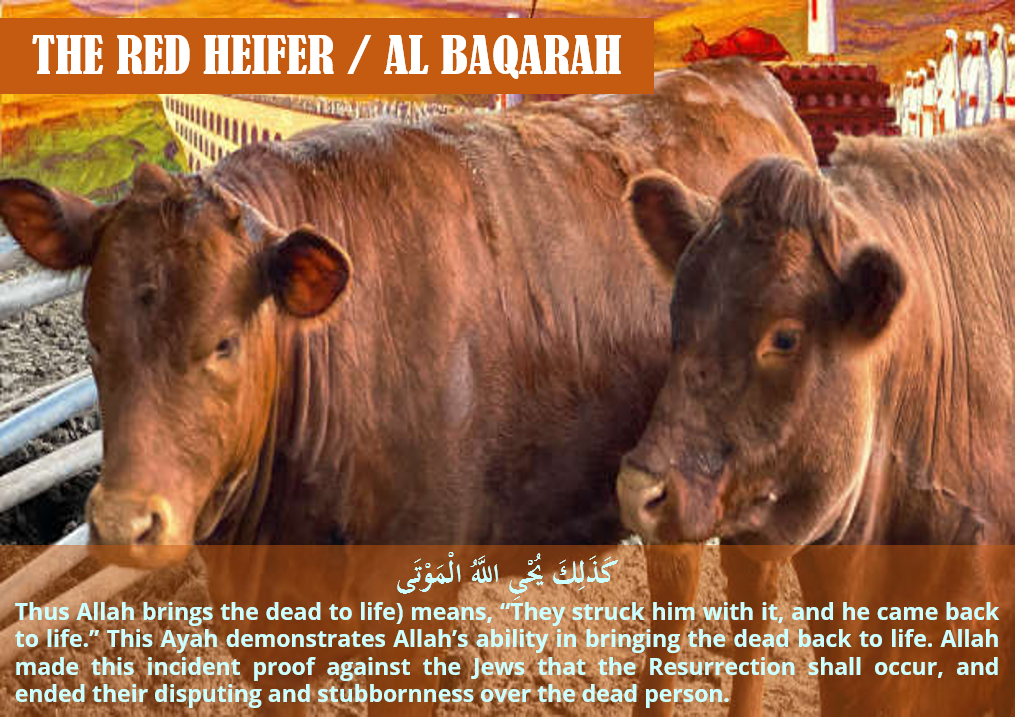
The Story From Al Quran - The Heifer /Al Baqarah


بِسْمِ اللهِ الرَّحْمٰنِ الرَّحِيْمِ

In the Name ofAllah, Most Gracious, Most Merciful


 The Story of the Heifer/ Al Baqarah:


[Illustration Only]

Allah the Almighty says:

وَإِذْ قَالَ مُوسَىٰ لِقَوْمِهِۦٓ إِنَّ ٱللَّهَ يَأْمُرُكُمْ أَن تَذْبَحُوا۟ بَقَرَةًۭ ۖ قَالُوٓا۟ أَتَتَّخِذُنَا هُزُوًۭا ۖ قَالَ أَعُوذُ بِٱللَّهِ أَنْ أَكُونَ مِنَ ٱلْجَـٰهِلِينَ ٦٧

قَالُوا۟ ٱدْعُ لَنَا رَبَّكَ يُبَيِّن لَّنَا مَا هِىَ ۚ قَالَ إِنَّهُۥ يَقُولُ إِنَّهَا بَقَرَةٌۭ لَّا فَارِضٌۭ وَلَا بِكْرٌ عَوَانٌۢ بَيْنَ ذَٰلِكَ ۖ فَٱفْعَلُوا۟ مَا تُؤْمَرُونَ ٦٨

قَالُوا۟ ٱدْعُ لَنَا رَبَّكَ يُبَيِّن لَّنَا مَا لَوْنُهَا ۚ قَالَ إِنَّهُۥ يَقُولُ إِنَّهَا بَقَرَةٌۭ صَفْرَآءُ فَاقِعٌۭ لَّوْنُهَا تَسُرُّ ٱلنَّـٰظِرِينَ ٦٩

قَالُوا۟ ٱدْعُ لَنَا رَبَّكَ يُبَيِّن لَّنَا مَا هِىَ إِنَّ ٱلْبَقَرَ تَشَـٰبَهَ عَلَيْنَا وَإِنَّآ إِن شَآءَ ٱللَّهُ لَمُهْتَدُونَ ٧٠

 قَالَ إِنَّهُۥ يَقُولُ إِنَّهَا بَقَرَةٌۭ لَّا ذَلُولٌۭ تُثِيرُ ٱلْأَرْضَ وَلَا تَسْقِى ٱلْحَرْثَ مُسَلَّمَةٌۭ لَّا شِيَةَ فِيهَا ۚ قَالُوا۟ ٱلْـَٔـٰنَ جِئْتَ بِٱلْحَقِّ ۚ فَذَبَحُوهَا وَمَا كَادُوا۟ يَفْعَلُونَ ٧١

وَإِذْ قَتَلْتُمْ نَفْسًۭا فَٱدَّٰرَْٰٔتُمْ فِيهَا ۖ وَٱللَّهُ مُخْرِجٌۭ مَّا كُنتُمْ تَكْتُمُونَ ٧٢

فَقُلْنَا ٱضْرِبُوهُ بِبَعْضِهَا ۚ كَذَٰلِكَ يُحْىِ ٱللَّهُ ٱلْمَوْتَىٰ وَيُرِيكُمْ ءَايَـٰتِهِۦ لَعَلَّكُمْ تَعْقِلُونَ ٧٣

{And (remember) when Musa (Moses) said to his people: "Verily, Allah commands you that you slaughter a cow.They said, "Do you make fun of us?" He said, "Itake Allah's Refuge from being among Al-Jahilun (the ignorant or the foolish). They said, "Call upon your Lord for us that He may make plain to us what it is!" He said, "He says: 'Verily, it is a cow neither too old nor too young, but (it is) between the two conditions', so do what you are commanded, They said, "Call upon your Lord for us to make plain to us its color." He said, "He says: 'It is a yellow cow, bright in its color, pleasing the beholders.” They said, "Call upon your Lord for us to make plain to us what it is. Verily, to us all cows are alike. And surely, if Allah wills, we will be guided.He [Musa (Moses)] said, "He says: 'It is a cow neither trained to tilt the soil nor water the fields, sound, having no other color except bright yellow. "They said, "Now you have brought the truth." So they slaughtered it though they were near to not doing it. And (remember) when you killed a man and fell into dispute among yourselves as to the crime. ButAllah brought forth that which you were hiding. So We said: "Strike him (the dead man) with a piece of it (the cow)." Thus Allah brings the dead to life and shows you His Aya: (proofs, evidences, verses, lessons, signs, revelations, etc.) so that you may understand}. 


(Al-Baqarah, 67-73)


'Abdullah Ibn 'Abbas, `Ubaidah As-Salmani, Abu Al-`Aliyah, Mujahid, As-Sadiy, and other earlier scholars said: An old man from among the Children of Israel was very rich, and he had some nephews who wished he would die soon to inherit him. One day, one of them on purpose murdered him at night and threw him on the road -or at the door of one of his own brothers. In the morning, the people found the dead body and they disputed over him. His nephew -the murderer -came and began to weep and cry. Some people said: Why do you dispute over him? Why do not you go to Allah's Prophet (Peace be upon him)? His nephew came and complained to Musa (Moses (Peace be upon him». Musa (Peace be upon him) said: by Allah! Anyone who knows anything about this murdered man, he should let us know. But, no one knew anything about it. Thereupon, they asked Musa (Peace be upon him) to ask his Lord concerning this issue. Musa (Peace be upon him) asked his Lord and he was commanded to order them to slaughter a cow, {Verily, Allah commands you that you slaughter a cow. They said, Do you make fun of us?} i.e. we ask you about the murdered and you say so! {He said, I take Allah's Refuge from being among Al-Jahilun (the ignorant or the foolish)} i.e. I take Allah's Refuge from saying other than that He revealed to me, and that was His Answer to what you had wanted me to ask Him.

Ibn 'Abbas,'Ubaidah, Mujahid, `Ikrimah, As-­Sadiy, Abu Al-`Aliyah and others said: If they were to slaughter any cow, they would fulfill the purpose thereof. But, they made it difficult for themselves (by asking so many questions thereof), and thus Allah the Almighty made it difficult for them (by stipulating so many conditions for the desired cow). They asked about its description, color, and age; and they were answered with what was scarce and dear (in a way to make it hard for them to find it). The point is that they were commanded to slaughter neither a too-old cow, nor a too-young, but (it is) between the two conditions. This view was held by Ibn `Abbas, Mujahid, Abu Al-`Aliyah, `Ikrimah, Al-Hasan, Qatadah, and others. Then, they pressed themselves with their questions by asking about its color. And they were answered to make it {yellow cow, bright in its color, pleasing the beholders}, which is very rare and dear.

      Then, they asked: {They said, "Call upon your Lord for us to make plain to us what it is. Verily, to us all cows are alike. And surely, if Allah wills, we will be guided.He [Musa (Moses)] said, "He says: 'It is a cow neither trained to tilt the soil nor water the fields, sound, having no other color except bright yellow.' "They said, "Now you have brought the truth." So they slaughtered it though they were near to not doing it}It is said that they could not find a cow with all these descriptions but with a man who was righteous and good to his father. They asked him to submit it to them, but he refused. They tried to seduce him as to its price till they offered him what equals its weight in gold. But, he refused. Then, they offered him an amount of gold that equals its weight ten times. Finally, he accepted their offer and submitted it to them. Then, Musa (Peace be upon him) commanded them to slaughter it {So they slaughtered it though they were near to not doing it} i.e. while they were hesitant.

Then, Musa (Peace be upon him) instructed them with the Command of Allah to strike the dead man with a piece of the cow. Some scholars said: with part of its thighbone, or with part of the flesh between its shoulders. When they stroke him with part thereof, he is resurrected by Allah the Almighty. Musa (Peace be upon him) asked him: who's your murderer? He said: it was my nephew who killed me. Then, he died again. Allah the Almighty says {Thus Allah brings the dead to life and shows you His Ayat (proofs, evidence, verses, lessons, signs, revelations, etc.) so that you may understand} i.e. as you witnessed the revival of that dead man by the Command of Allah the Almighty, He can do the same to all the dead people when He wishes to:

مَّا خَلْقُكُمْ وَلَا بَعْثُكُمْ إِلَّا كَنَفْسٍۢ وَٰحِدَةٍ ۗ إِنَّ ٱللَّهَ سَمِيعٌۢ بَصِيرٌ ٢٨

He, Almighty Allah, says {The creation of you all and the resurrection of you all are only as (the creation and resurrection of) a single person. Verily, Allah is All-Hearer, All-Seer}. 

(Luqman, 28)


Kisah Kaum Al-Araf Perjalanan Ruh Di Antara Cahaya Surga Firdaus Dan Kegelapan Neraka Jahannam

 بِسْمِ ٱللّٰهِ ٱلرَّحْمٰنِ ٱلرَّحِيمِ Dalam Al-Qur’an, istilah  Al-A’raf  merujuk pada tempat yang berada di antara Surga Firdaus dan Nerak...